
The Big Five
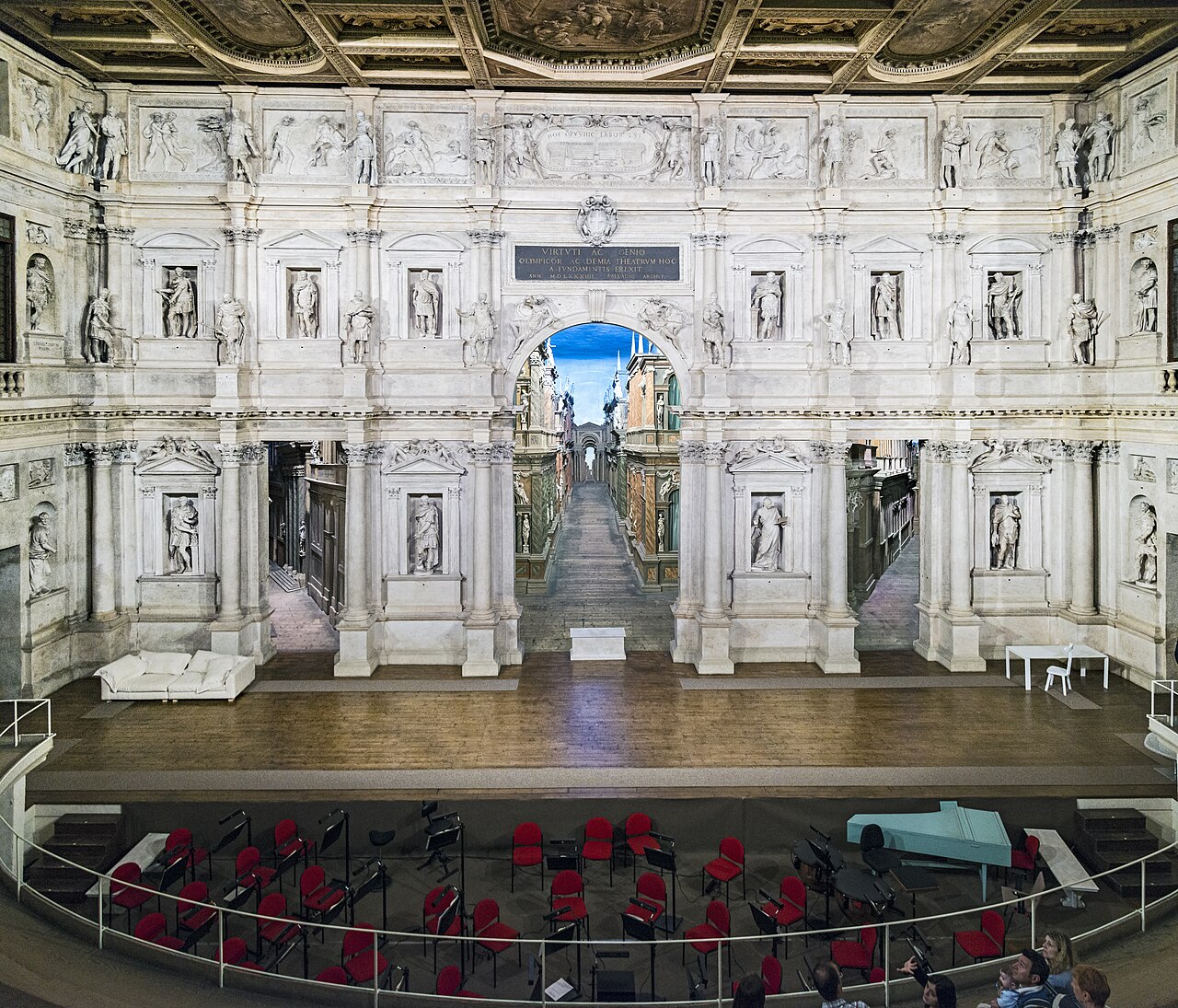
1. Teatro Olimpico
The world's oldest surviving indoor theater and Palladio's final masterpiece, completed after his death by Vincenzo Scamozzi in 1585. The permanent stage set — a forced-perspective cityscape of "Thebes" built in wood and stucco — has been in place for over 400 years and still creates the illusion of streets receding hundreds of meters. Entry is timed; the visit takes 30–45 minutes. It still hosts concerts and a classical drama season in autumn (see Events). Full Teatro Olimpico guide →
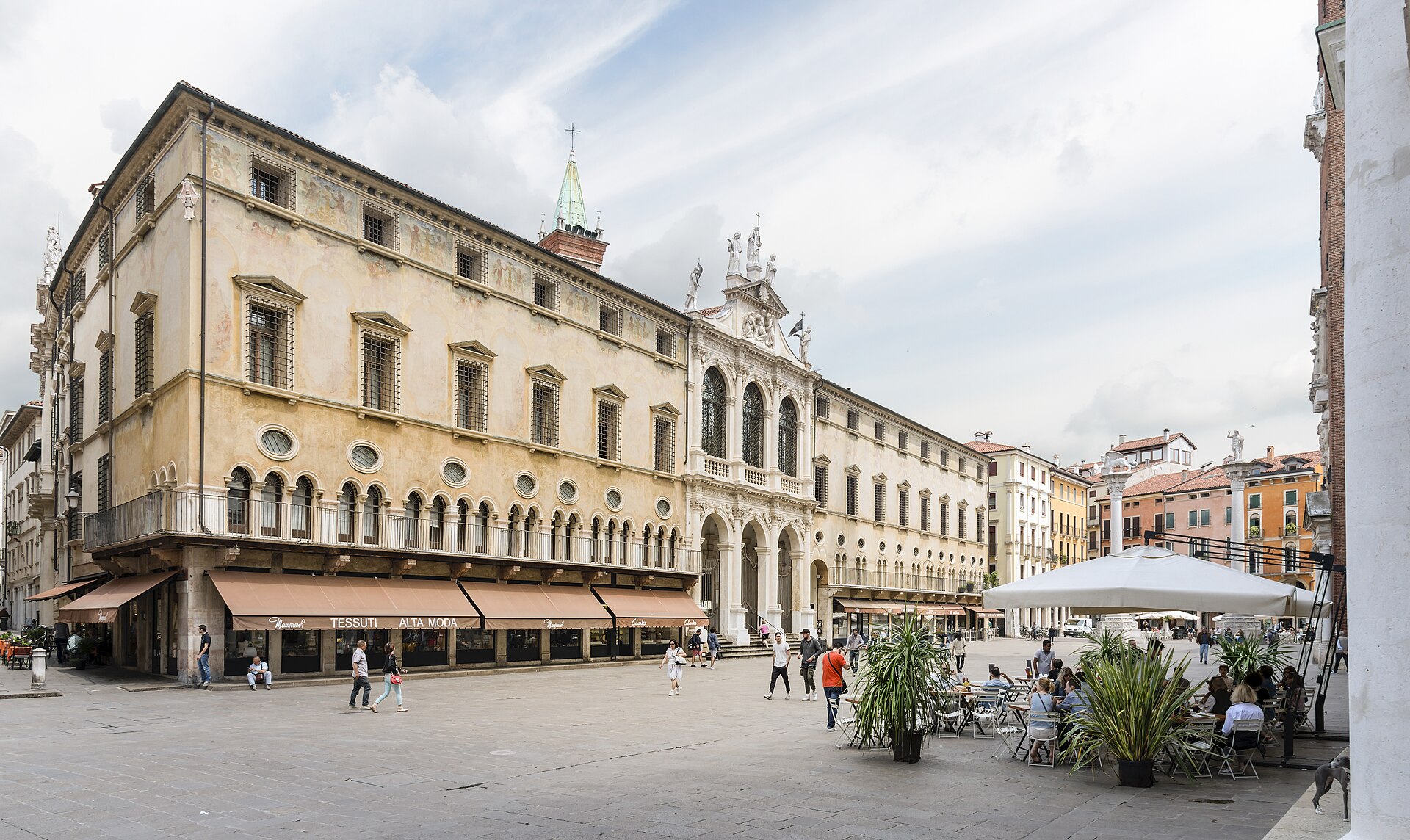
2. Basilica Palladiana & Piazza dei Signori
Not a church — "basilica" in the Roman civic sense. Palladio wrapped the city's Gothic council hall in a double loggia of white stone that made his reputation, and its copper-keeled roof dominates the skyline. The building hosts major art exhibitions, and in season you can climb to the rooftop terrace — go at sunset. The surrounding Piazza dei Signori, with the slender 82 m Torre Bissara clock tower and twin columns, is the city's living room: come at aperitivo hour and it's full of vicentini with spritzes. Full Piazza dei Signori guide →
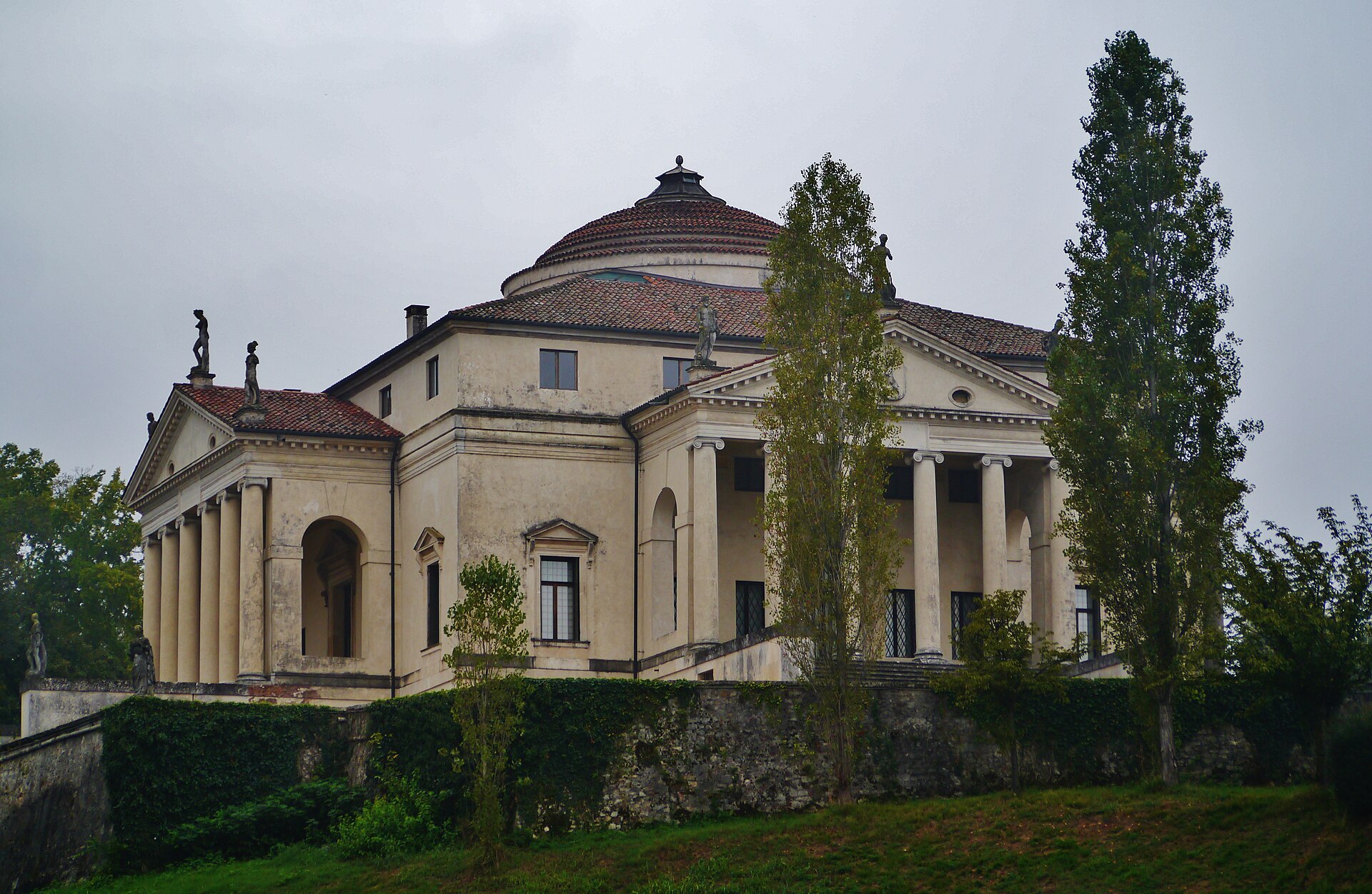
3. Villa La Rotonda (Villa Almerico Capra)
Palladio's most imitated building — a perfectly symmetrical villa with four identical temple-front porches crowning a hilltop about 20–25 minutes' walk (or a short bus/taxi ride) southeast of the center. It inspired Jefferson's Monticello and countless others. The grounds are open regularly; the richly frescoed interior opens on more limited days — check current hours before making the trip. Combine it with Villa Valmarana ai Nani, ten minutes' walk away. Full La Rotonda guide →
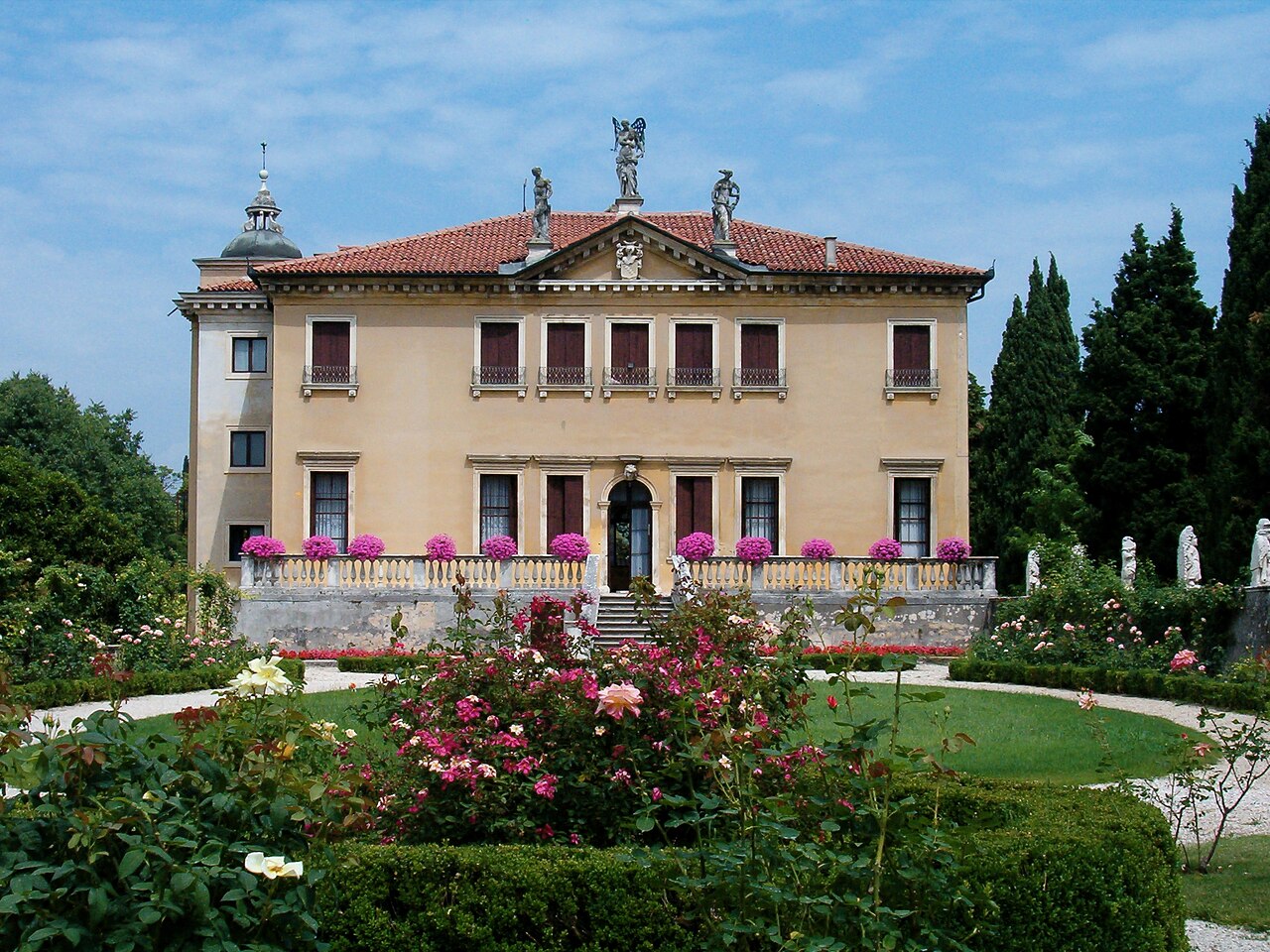
4. Villa Valmarana ai Nani
A short walk from La Rotonda along a pretty lane, this villa is famous for two things: the spectacular 1757 fresco cycles by Giambattista Tiepolo (in the main house) and his son Giandomenico (in the guesthouse), and the stone dwarfs (nani) lining the garden wall, subject of a melancholy local legend. Many visitors find the frescoes the single most beautiful sight in Vicenza.
5. Santuario di Monte Berico
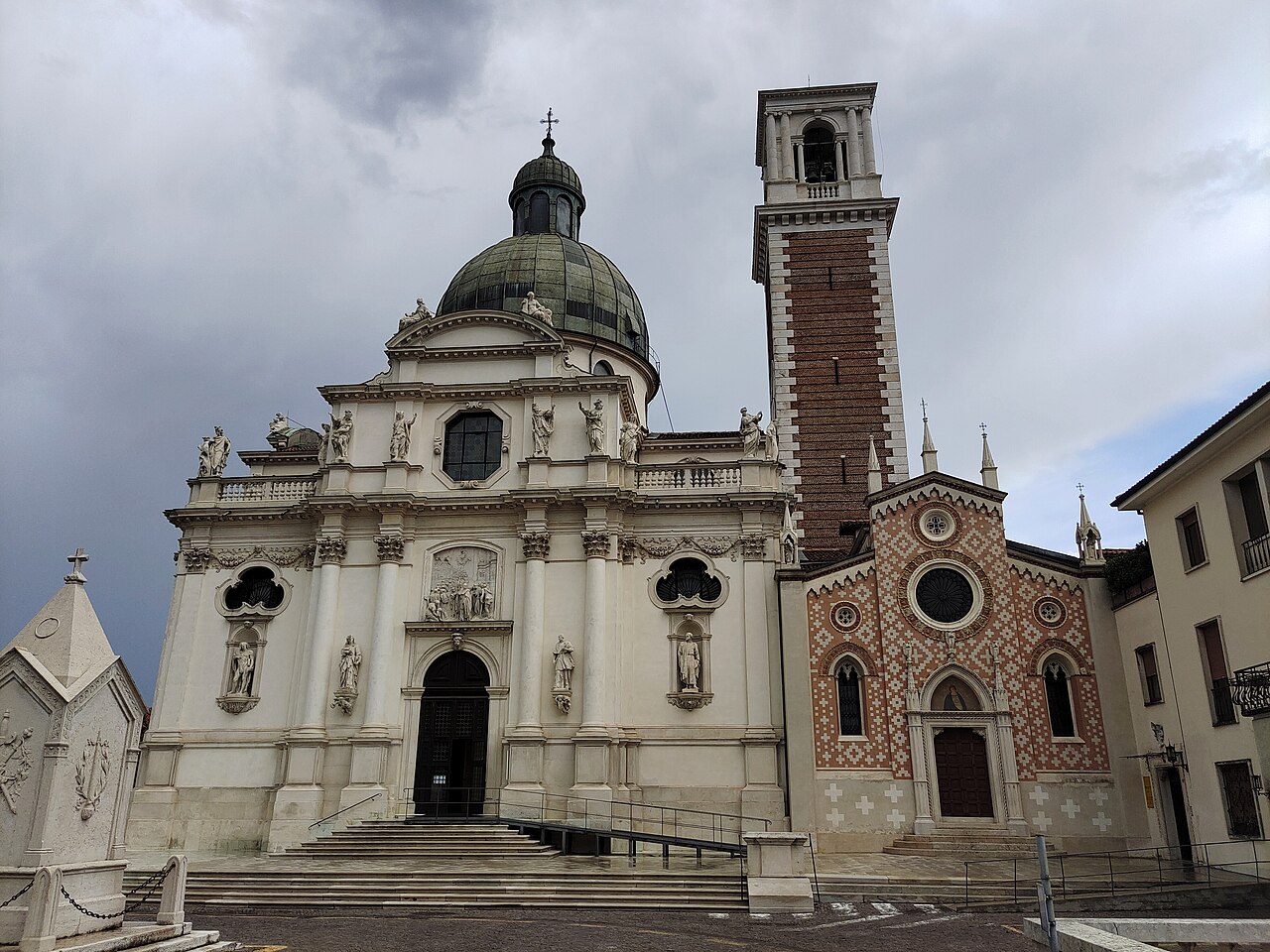
The baroque basilica crowning the hill south of the city, reached by a covered arcade of 150 arches (the portici) built so pilgrims could climb in any weather — locals jog it daily. The reward: a sweeping view over Vicenza's rooftops to the Alps, and inside, Veronese's huge Supper of St. Gregory the Great. The walk up from the center takes about 25–35 minutes; bus and car options exist.
More Worth Seeing
Corso Andrea Palladio
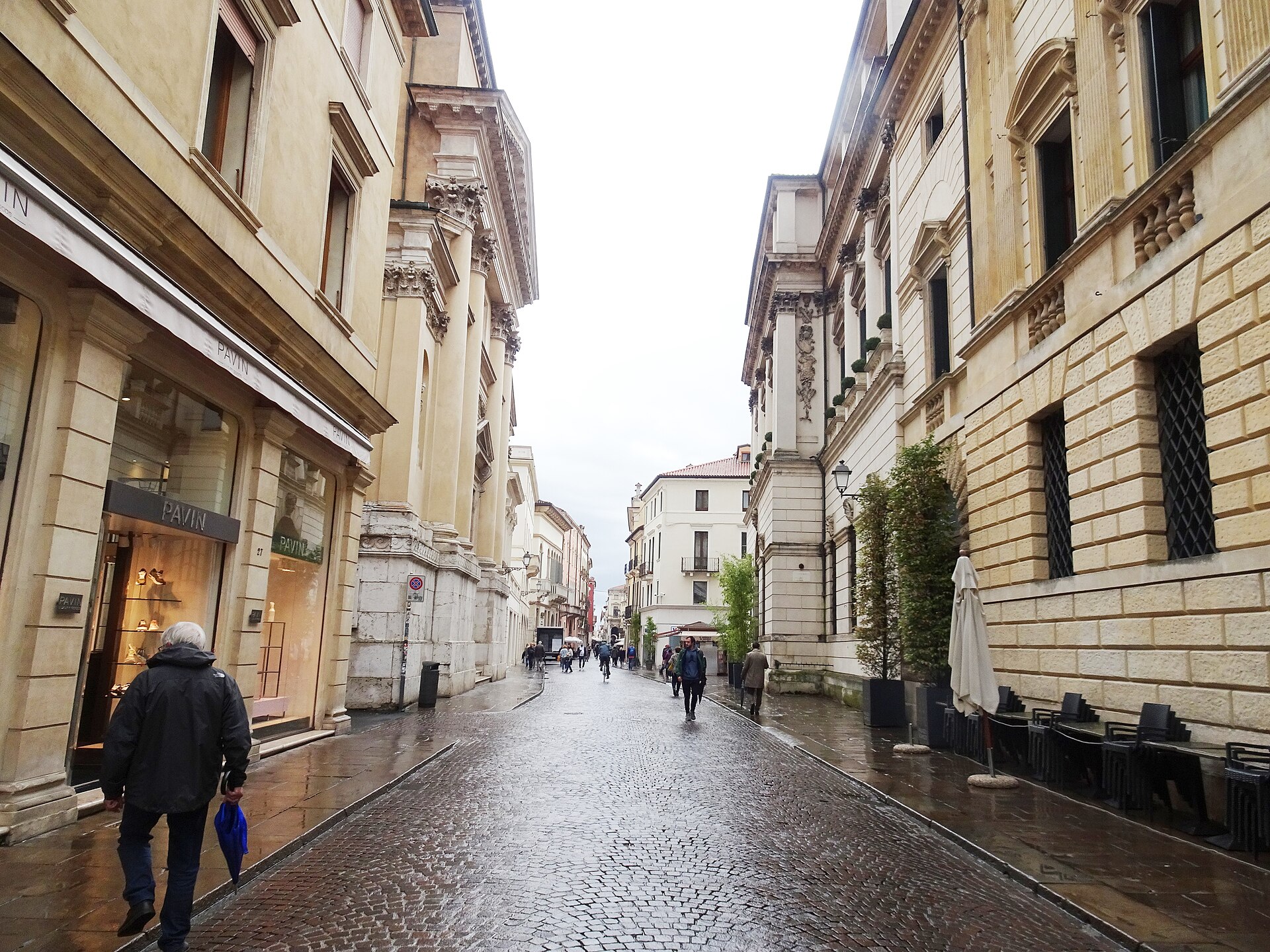
The main street since Roman times: 700 m of palaces, porticoes, cafés, and shops. The evening passeggiata here is an attraction in itself.
Palazzo Chiericati
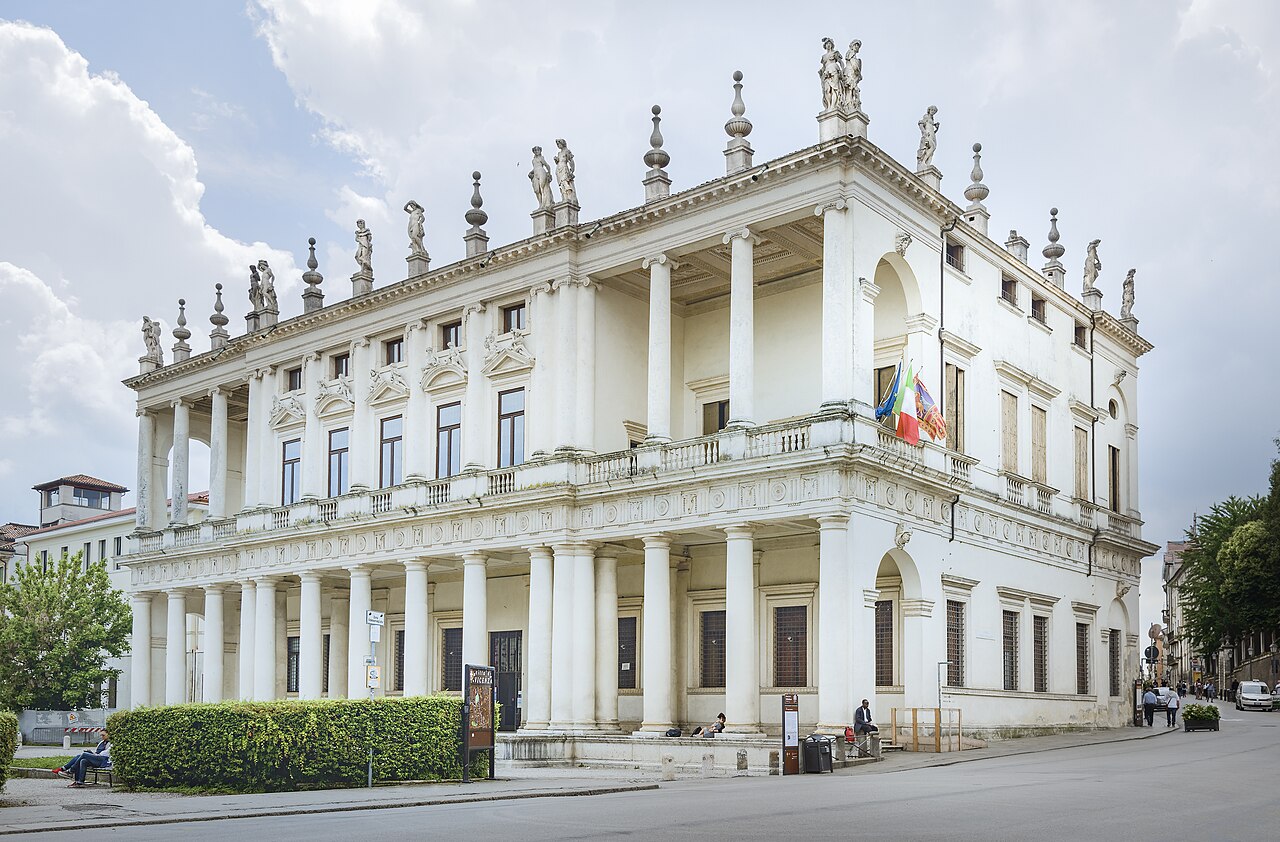
Palladio's most theatrical palace houses the Civic Art Gallery — Veneto painting from the 13th to 20th centuries, including Tintoretto and Tiepolo.
Chiesa di Santa Corona
A 13th-century Dominican church holding Giovanni Bellini's luminous Baptism of Christ and Veronese's Adoration of the Magi. Palladio was originally buried here before his remains were moved to the civic cemetery in the 19th century. Small entry fee; check hours.
Palladio Museum
Inside Palazzo Barbarano on Contra' Porti: models, drawings, and a smart introduction to why Palladio matters. Do it before the villas if you like context first.
Duomo & Roman cryptoporticus
The cathedral (rebuilt after WWII bombing) has a Palladian dome; nearby, an underground Roman cryptoporticus from the 1st century BC survives beneath the piazza — open limited weekend hours.
Giardino Salvi
A small Renaissance garden by the western gate with two loggias over the water, one attributed to the Palladio school. A shady rest stop near the station end of town.
Parco Querini
The city's biggest park: a French-style avenue, a little island temple, resident rabbits and ducks, and vicentini jogging. Great with kids.
Casa Pigafetta
The flamboyant Gothic house of Antonio Pigafetta, the Vicenza-born chronicler who sailed with Magellan and was one of the 18 men to complete the first circumnavigation. Facade only, but a great story.
Museums & the Vicenza Card
The Vicenza Card (sold at the Teatro Olimpico ticket office and tourist office, Piazza Matteotti) bundles the Teatro Olimpico, Palazzo Chiericati, Santa Corona, the Naturalistic-Archaeological Museum, the Risorgimento Museum, and more for one price, valid several days. If you're seeing the theater plus even one museum, it usually pays for itself.
| Site | Typical time needed | Notes |
|---|---|---|
| Teatro Olimpico | 30–45 min | Closed Mondays. Timed entry at busy periods. |
| Palazzo Chiericati | 1–1.5 hr | Closed Mondays. |
| Palladio Museum | 45 min | Check current days — not open daily. |
| Basilica Palladiana terrace | 30 min | Seasonal/evening openings; exhibitions vary. |
| Villa La Rotonda | 1 hr + travel | Grounds most days; interior limited days. |
| Villa Valmarana ai Nani | 1 hr | Usually open daily in season. |
| Monte Berico | 1.5–2 hr round trip on foot | Free. Basilica closes at lunch. |
Ready-Made Itineraries
Half a day (between trains)
- From the station, walk up Viale Roma and turn right onto Corso Palladio.
- Detour into Piazza dei Signori — coffee under the Basilica Palladiana.
- Continue the Corso to Piazza Matteotti: visit the Teatro Olimpico.
- Loop back along Contra' Porti for palace facades. Total: ~3 hours.
One full day
- Morning: Teatro Olimpico at opening, then Palazzo Chiericati or the Palladio Museum.
- Lunch near Piazza delle Erbe — try baccalà alla vicentina (Food guide).
- Afternoon: walk or ride to Villa Valmarana ai Nani and La Rotonda.
- Late afternoon: climb the portici to Monte Berico for the view.
- Evening: spritz in Piazza dei Signori, dinner in the center.
A weekend
Day one as above. Day two: morning at Santa Corona and the Duomo cryptoporticus, market browsing if it's Tuesday or Thursday, then an afternoon day trip — Bassano del Grappa and Marostica pair perfectly, or head to Padua (20 minutes by train).