
A Short History of Vicenza
Ancient roots. Vicenza began as a settlement of the Veneti people and became the Roman municipium of Vicetia in 49 BC. The Roman street grid still underlies the historic center — Corso Palladio follows the ancient decumanus maximus — and fragments of a Roman theater and aqueduct survive.
Middle Ages. After waves of Gothic and Lombard rule, Vicenza emerged as a medieval commune, then fell under the control of powerful neighbors: the Scaligeri of Verona, the Visconti of Milan, and finally, in 1404, the Republic of Venice — a relationship that would define the city for four centuries.
The Venetian golden age. Under Venice, Vicenza's nobility grew rich on silk, textiles, and land, and spent competitively on architecture. Into this environment stepped Andrea Palladio in the 16th century, rebuilding the city's face with palaces, public buildings, and country villas. The city became a showcase of Renaissance ideals that architects have imitated ever since.
Modern era. Napoleon ended the Venetian Republic in 1797; Austrian rule followed until Vicenza joined the Kingdom of Italy in 1866. The city resisted Austria heroically in 1848 — earning a gold medal for military valor — and suffered heavy Allied bombing in World War II, which destroyed part of the center (carefully rebuilt afterward). Since 1994 the "City of Vicenza and the Palladian Villas of the Veneto" has been a UNESCO World Heritage Site.
Today. Vicenza is one of Italy's most productive provinces — a world capital of gold jewelry manufacturing, plus precision machinery, textiles, and leather. It is also home to US Army Garrison Italy, making the American accent a familiar sound downtown since the 1950s.
Who Was Palladio?
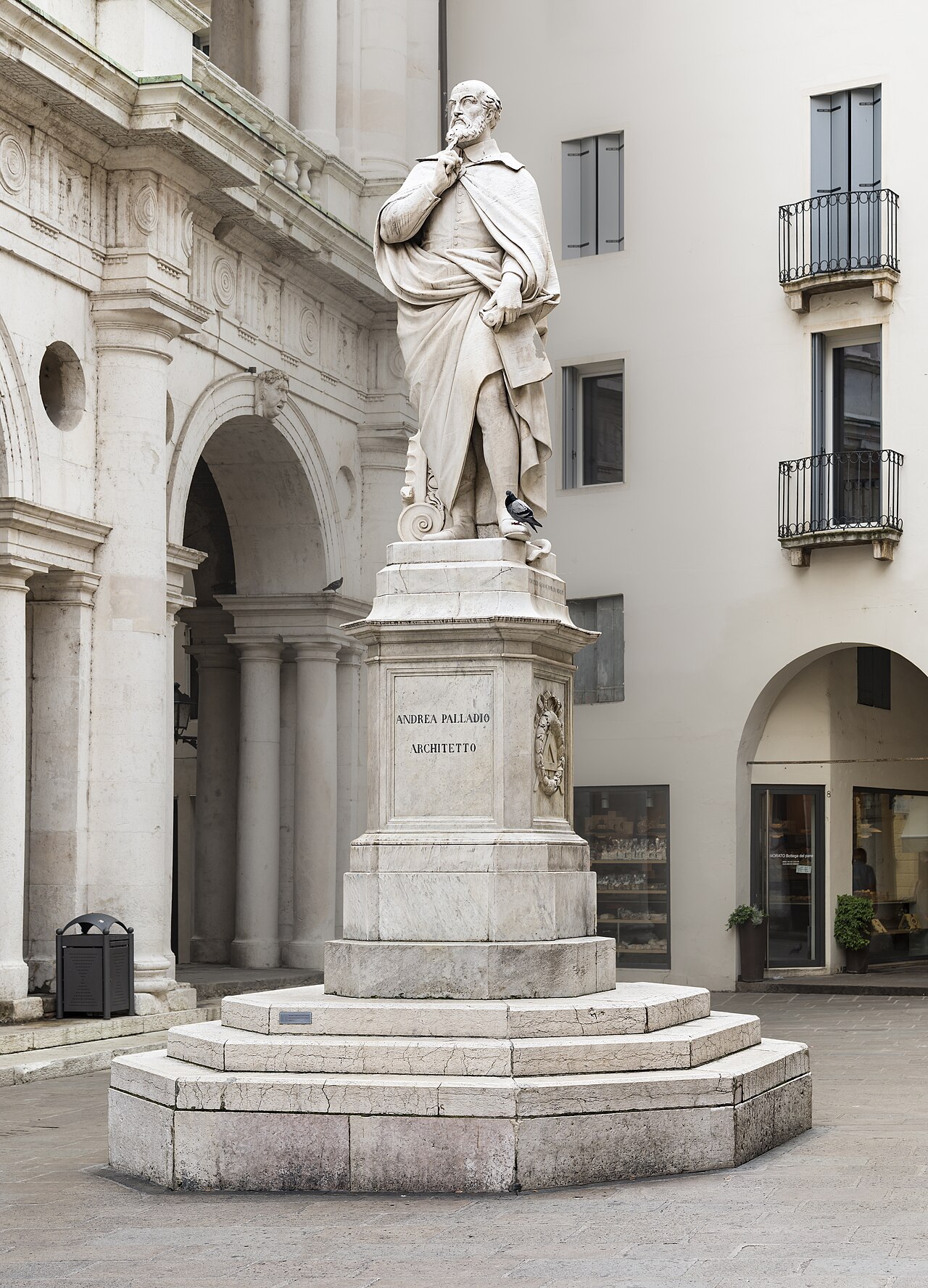
Andrea Palladio (1508–1580) was born in Padua and worked in Vicenza as a stonemason until a local humanist nobleman, Gian Giorgio Trissino, spotted his talent, gave him a classical education, and renamed him "Palladio" after Pallas Athena. He became the most influential architect in Western history.
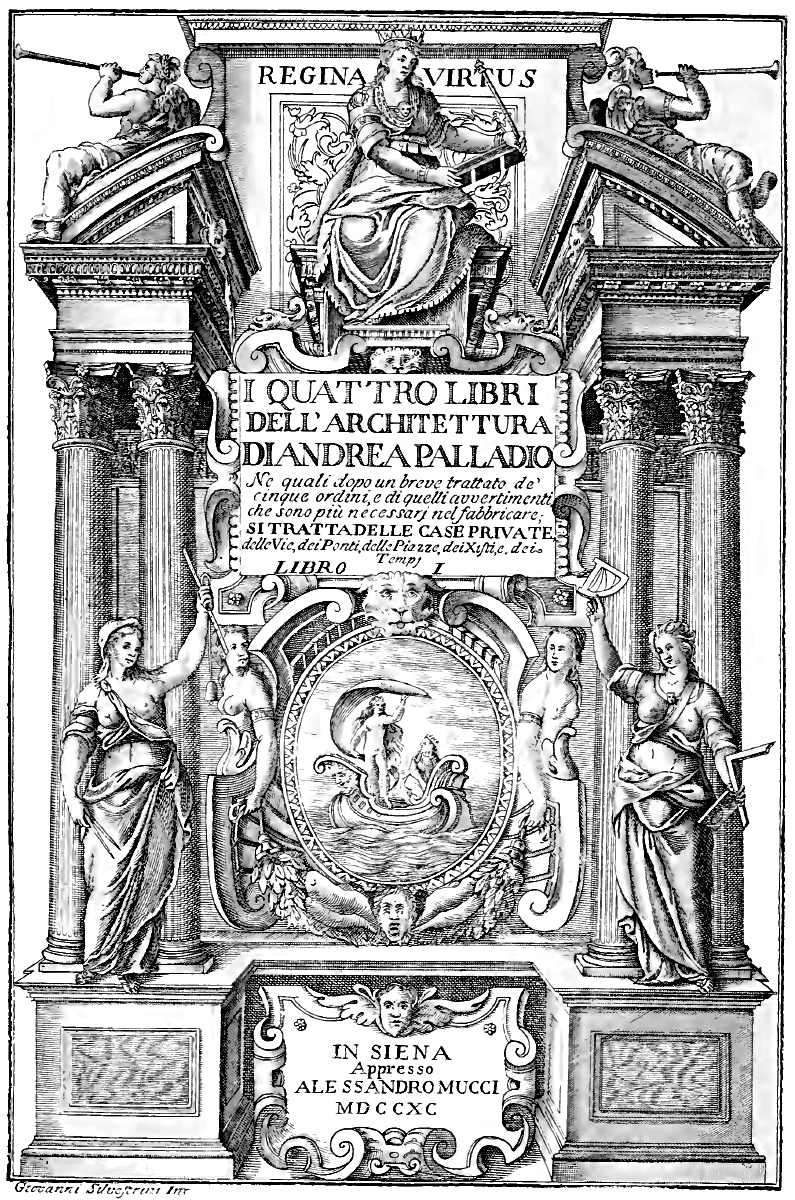
His genius was to translate the grandeur of ancient Roman architecture into buildings that ordinary (rich) clients could actually build and live in — harmonious proportions, temple fronts on houses, elegant symmetry. His treatise, The Four Books of Architecture (1570), spread the style worldwide. The White House, the US Capitol, and thousands of country houses from England to Virginia are his descendants — Thomas Jefferson called the Four Books his "bible."
The Daily Rhythm
Life in Vicenza follows a schedule that surprises many visitors. Plan around it and everything gets easier.
| Time | What's happening |
|---|---|
| 7:00–11:00 | Breakfast is a cappuccino and a brioche standing at a bar. Markets and food shops are in full swing. |
| 12:30–14:30 | Lunch. Kitchens open around 12:30 and close by 14:00–14:30. Many smaller shops close for a long lunch break (riposo). |
| 15:30–19:30 | Shops reopen. Around 18:00 the passeggiata begins — the whole town strolls Corso Palladio — and aperitivo hour starts with a spritz. |
| 19:30–22:00 | Dinner. Restaurants open around 19:00–19:30; locals eat at 20:00. Arriving at 18:00 expecting dinner marks you as a tourist. |
| Sunday | Many shops and some restaurants close. Museums stay open; Monday is the usual museum closing day. |
Etiquette: The Unwritten Rules
Greetings and manners
- Say buongiorno (good morning) or buonasera (good evening) when entering any shop, bar, or small business, and arrivederci when leaving. This matters more than almost anything else.
- Ciao is informal — use it with friends, not with shopkeepers or officials you've just met. When in doubt, salve is a safe neutral hello.
- Handshakes for introductions; cheek kisses (right first) between friends.
- Please and thank you: per favore and grazie. Even attempting Italian earns visible goodwill.
Coffee and table rules
- Cappuccino is a breakfast drink. After lunch or dinner, order un caffè (an espresso). No one will stop you ordering otherwise, but now you know.
- Coffee is drunk standing at the bar in seconds, not carried around in a to-go cup. Table service can cost more than bar service — that's normal, not a scam.
- The coperto (cover charge, usually €1.50–3 per person) on restaurant bills is standard and legal. Tipping is modest — see Essentials.
- Ask for the bill (il conto, per favore); it won't be brought until you do. Lingering is expected, and no one is rushing you out.
Dress and behavior
- Vicentini dress well without being flashy. You don't need to, but athletic shorts, flip-flops, and ball caps downtown read as loudly American. Smart-casual blends in.
- Churches require covered shoulders and knees. Monte Berico and Santa Corona enforce this.
- Keep restaurant and street voices moderate — noise carries, and volume is the most common friction point between visitors and locals.
- Public drunkenness is heavily frowned upon. Italians drink with food, over hours, and rarely to excess in public.
The Veneto character
People from the Veneto have a reputation in Italy for being hard-working, reserved at first, and fiercely proud of their local identity. You may hear the Veneto dialect (vèneto) spoken between locals — it's a distinct language with Venetian roots, not "bad Italian." Don't be discouraged if people seem formal initially; courtesy and a little Italian melt the reserve quickly.
Survival Italian
English is widely understood in hotels and by younger people, less so in small shops, and barely at all in some village trattorie. These twenty phrases cover 90% of situations.
| Italian | Pronunciation | Meaning |
|---|---|---|
| Buongiorno / Buonasera | bwon-JOR-no / bwo-na-SEH-ra | Good morning / evening |
| Salve | SAL-veh | Hello (neutral) |
| Arrivederci | ah-ree-veh-DEHR-chee | Goodbye |
| Per favore / Grazie | pehr fa-VO-reh / GRAH-tsyeh | Please / Thank you |
| Prego | PREH-go | You're welcome / after you |
| Scusi | SKOO-zee | Excuse me (formal) |
| Parla inglese? | PAR-la een-GLEH-zeh | Do you speak English? |
| Non parlo italiano | non PAR-lo ee-tal-YAH-no | I don't speak Italian |
| Quanto costa? | KWAN-to KOS-ta | How much is it? |
| Il conto, per favore | eel KON-to | The bill, please |
| Dov'è…? | doh-VEH | Where is…? |
| La stazione | la sta-TSYO-neh | The train station |
| Il bagno | eel BAHN-yo | The bathroom |
| Un caffè / Uno spritz | oon kaf-FEH / OO-no spritz | An espresso / a spritz |
| Vorrei… | vor-RAY | I would like… |
| Va bene | va BEH-neh | OK / that's fine |
| Aiuto! | ah-YOO-to | Help! |
| Non capisco | non ka-PEES-ko | I don't understand |
| Posso pagare con carta? | POS-so pa-GA-reh kon KAR-ta | Can I pay by card? |
| Buon appetito | bwon ah-peh-TEE-to | Enjoy your meal |