
Why It Matters
Step through an unassuming courtyard off Piazza Matteotti and you enter the Renaissance's boldest experiment: a fully roofed, permanent theater built on the model of ancient Rome, by a 72-year-old Palladio at the height of his powers. Nothing else like it survives anywhere.
The Teatro Olimpico was commissioned in 1580 by the Accademia Olimpica, the learned society of which Palladio himself was a founding member, to stage classical drama. Palladio died just months into construction; his son Silla carried the work forward from his father's drawings, and the theater opened on 3 March 1585 with a legendary performance of Sophocles' Oedipus Rex.
Together with the rest of the city's Palladian ensemble, the theater is part of the UNESCO World Heritage Site "City of Vicenza and the Palladian Villas of the Veneto."
The Famous Stage Set
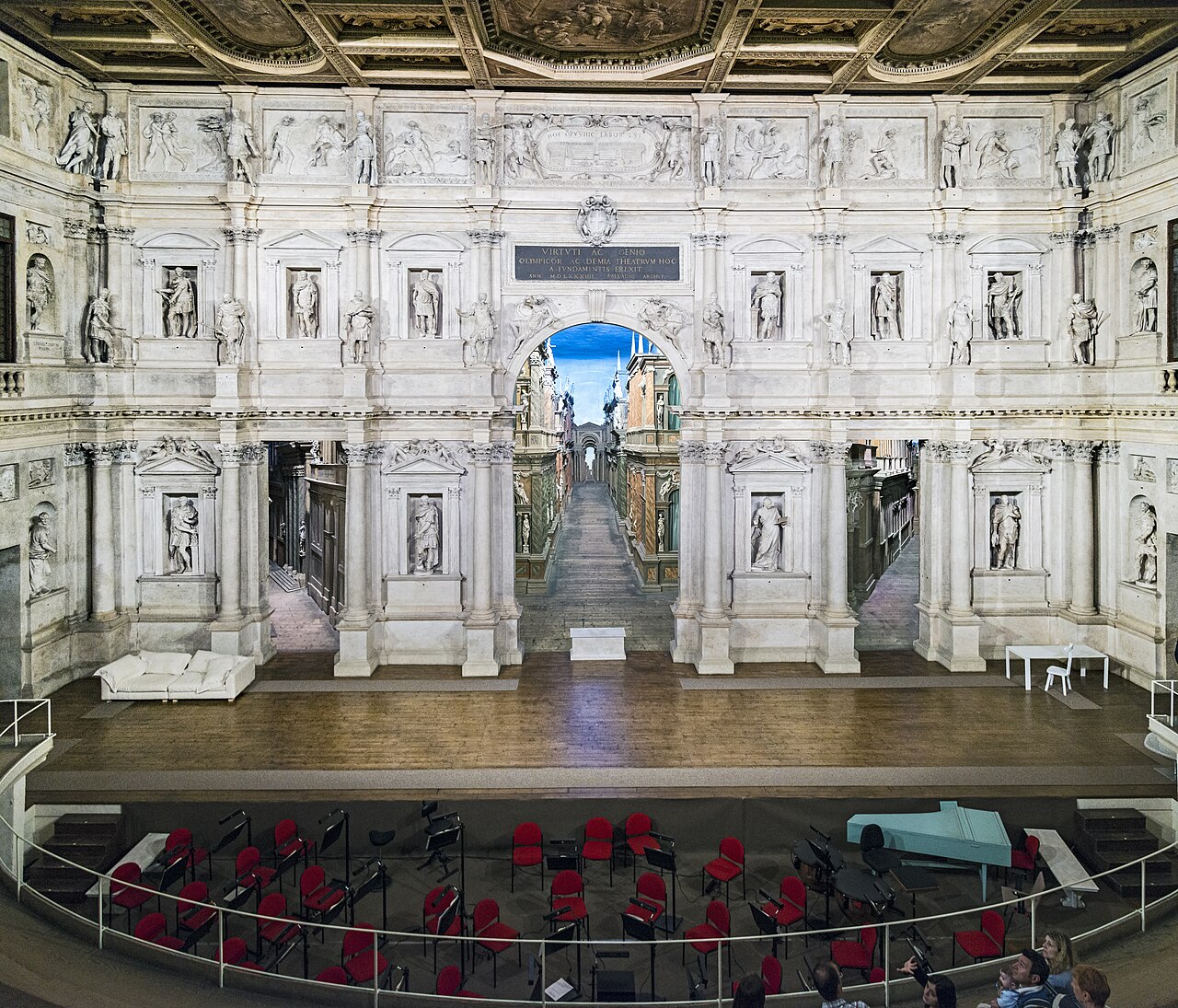
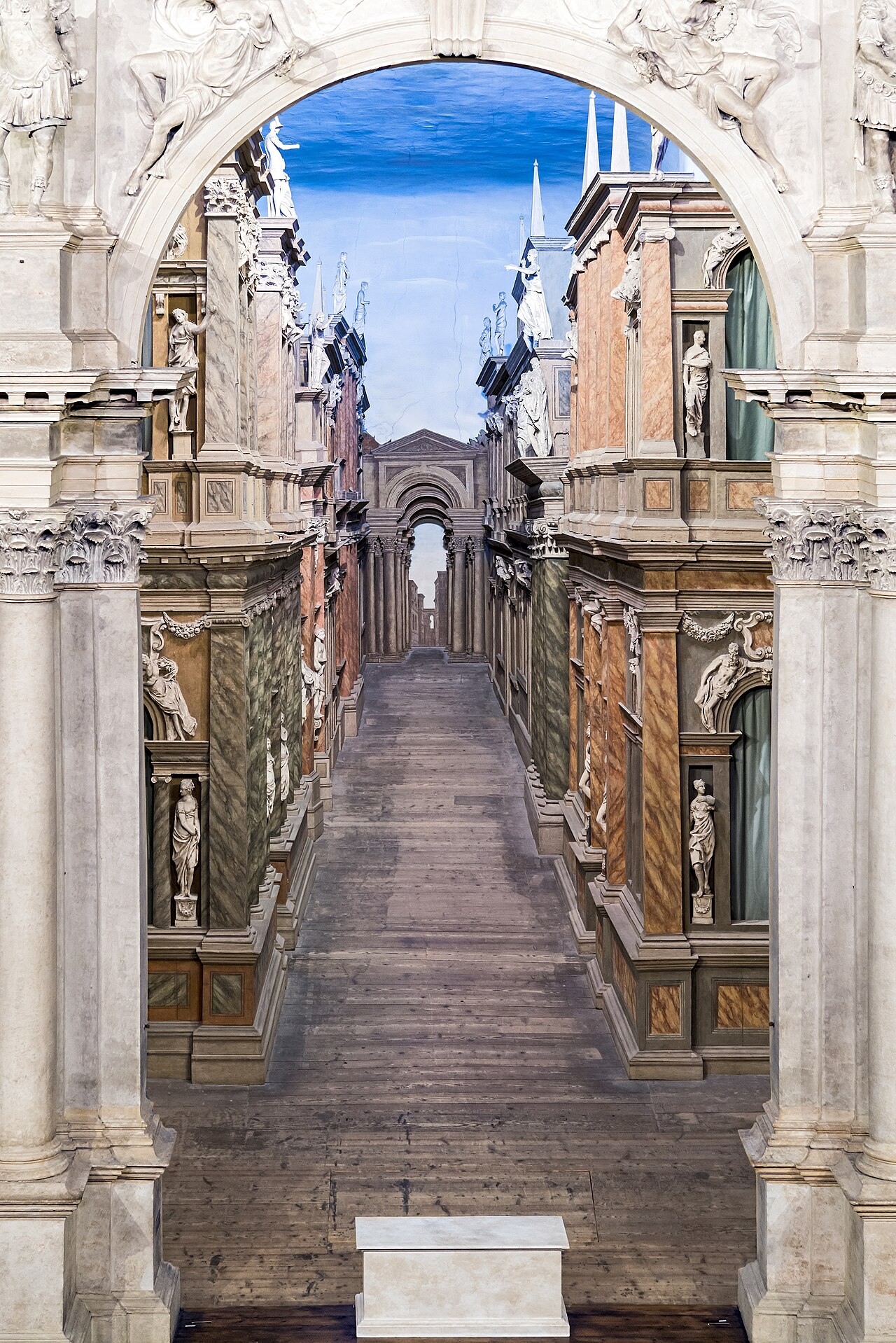
For that opening night, Vincenzo Scamozzi — the young architect who would finish several of Palladio's projects — built a temporary set behind the stage's monumental scaenae frons: seven streets of an idealized Thebes, constructed in wood and stucco with steeply forced perspective. Stand in the center of the cavea and the streets seem to run away for hundreds of meters; in reality the deepest is about twelve meters.
The set was never dismantled. More than four centuries later, it is the oldest surviving stage scenery in existence — one reason visits are carefully managed and the hall's climate is monitored.
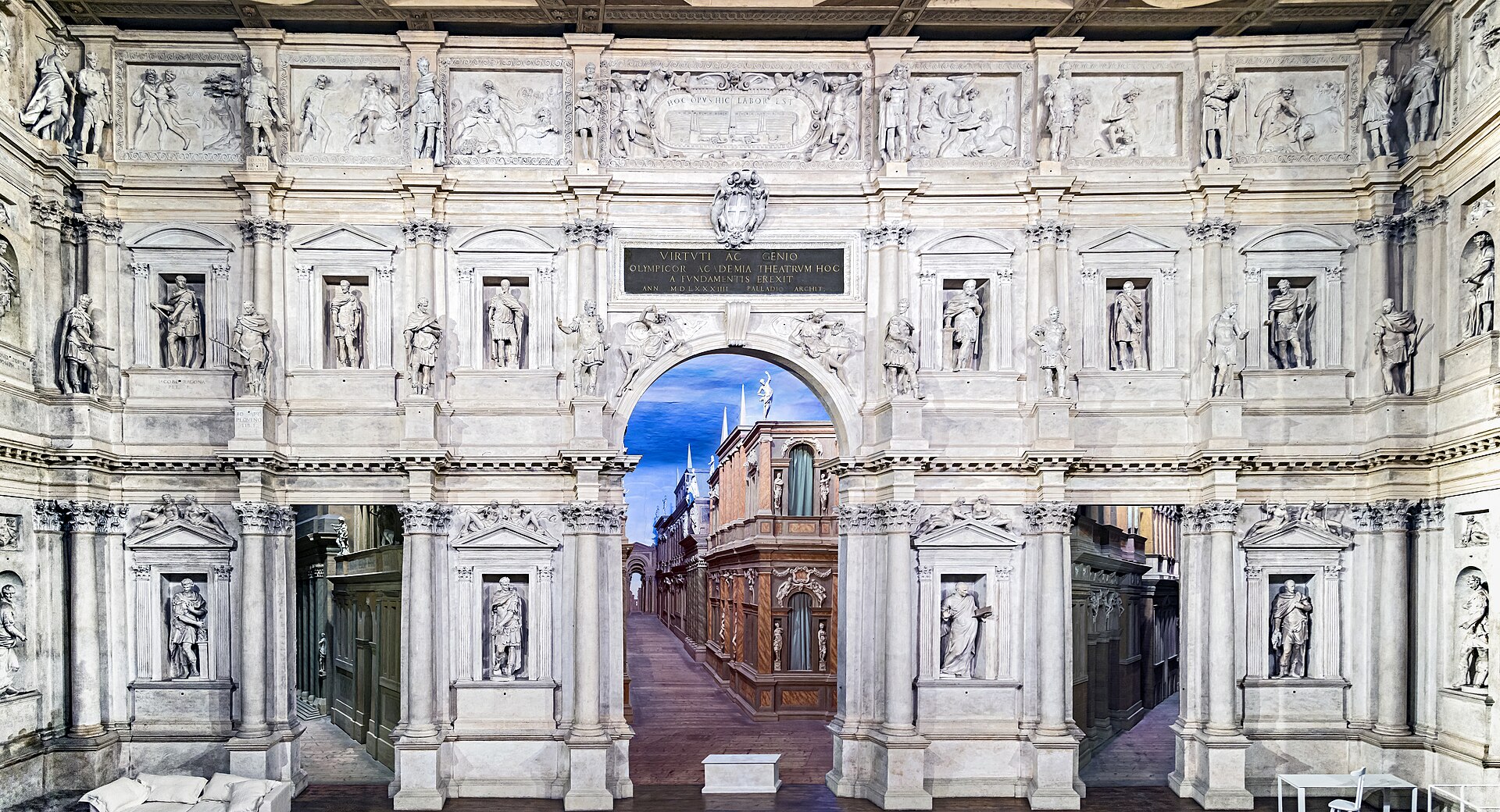
Look up: the ceiling over the seating is painted as an open sky, completing Palladio's illusion of an ancient open-air theater. The statues ringing the scaenae frons portray members of the Accademia Olimpica in classical dress — Renaissance gentlemen playing Roman heroes.
Visiting
- Tickets: buy at the ticket office beside the entrance or online. The Vicenza Card (which bundles the theater with Palazzo Chiericati, Santa Corona, and other civic museums) usually pays for itself if you visit even one more site — see the Sights guide.
- Timed entry applies in busy periods; mornings right at opening are quietest.
- Hours vary by season (roughly 9:00–17:00 in winter, later in summer). Confirm current times at the tourist office next door (Piazza Matteotti) or on the city museums' site before you build a day around it.
- Accessibility: the theater is reached through the Odeo courtyard; the cavea has steps, but staff can advise step-free options.
- Photography without flash or tripods is generally permitted — the light on the stage set is dim to protect it, so steady hands help.
Make a Morning of It
The theater sits at the eastern end of Corso Palladio. Pair it naturally with:
- Palazzo Chiericati, directly across Piazza Matteotti — the civic art gallery in one of Palladio's finest palaces (same combined ticket).
- Santa Corona, three minutes up the street, for Bellini's Baptism of Christ.
- A slow walk back along Corso Palladio to Piazza dei Signori for coffee under the Basilica.